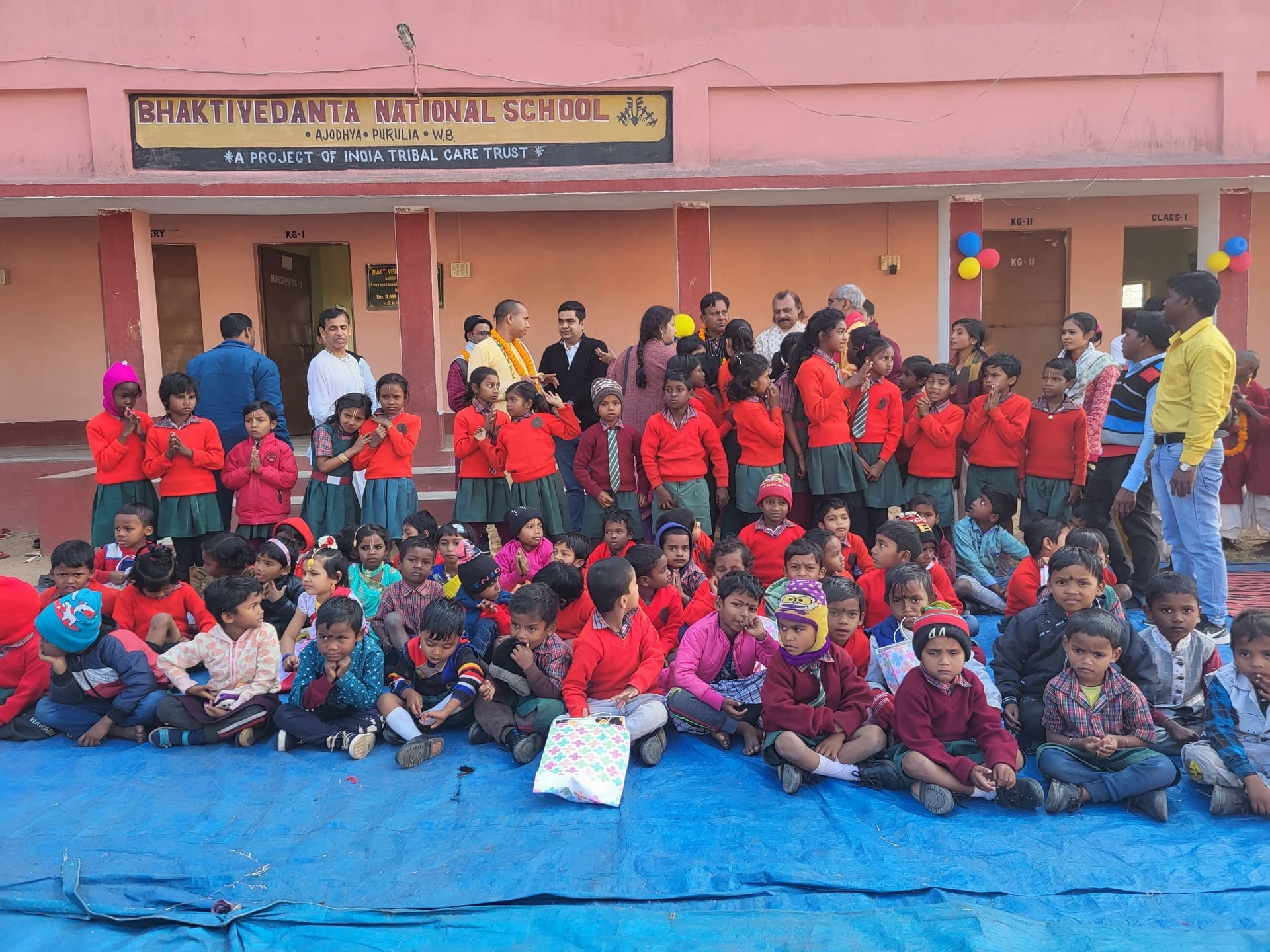
Early Childhood Literacy: The Impact of Vernacular Pathshalas

Literacy is the master key to human empowerment. It unlocks access to information, enables economic self-sufficiency, protects individuals from exploitation, and fosters personal dignity. Yet, in the remote indigenous hamlets of India, achieving early childhood literacy presents unique and complex hurdles. For a first-generation tribal learner, entering the world of letters is not merely a cognitive step; it is a profound cultural transition.
At the India Tribal Care Trust (ITCT), our experience across hundreds of forest villages has shown that conventional educational approaches often fail tribal children during their earliest, most critical years. To solve this, ITCT developed the Vernacular Pathshala Model—a community-based early literacy initiative that brings foundational learning directly to the child's doorstep in a language they understand.
The Language Barrier: Why First-Generation Learners Struggle
To understand the necessity of vernacular pathshalas, one must first understand the linguistic isolation of tribal children. A child growing up in a Santhal, Munda, Ho, or Karbi hamlet hears only their native mother tongue at home. Their songs, family conversations, emotional expressions, and social interactions occur entirely in their indigenous language.
When a six-year-old tribal child enters a standard state-run primary school, they are abruptly confronted with textbooks and instruction delivered exclusively in Hindi, Bengali, or Assamese—languages they may have never spoken or heard before.
The consequences of this linguistic shock are devastating:
1. Cognitive Disconnect: The child cannot connect the spoken words of the teacher with the printed symbols on the page.
2. Loss of Confidence: Unable to comprehend lessons, the child feels inadequate and remains silent, falling behind their peers.
3. High Early Dropout: Discouraged by constant failure and confusion, children stop attending within the first two years of primary schooling.
Language should be a bridge to learning, not a barrier. When early literacy is introduced in the child's mother tongue alongside regional scripts, the magic of reading unfolds naturally.
The Pathshala Approach: Bringing School to the Hamlet
An ITCT Pathshala is not a distant, intimidating institutional building. It is a warm, community-centered learning space located right inside the village hamlet—often operating on a covered house veranda, under a shade tree, or in a simple village hall.

Core Elements of the Pathshala Literacy Method:
1. Local Vernacular Educators
Pathshala teachers are recruited from the same or neighboring tribal villages. Because the teacher speaks the child's native dialect fluently, communication is effortless and warm. The teacher can explain complex concepts in Santhali or Mundari while gradually introducing regional script characters.2. Mother-Tongue Primers and Phonetic Materials
ITCT utilizes bilingual learning materials, including classic vernacular primers like Borno Porichoy (Character Introduction), visual alphabet charts, and illustrated storybooks. Children learn phonetics by associating letter sounds with familiar everyday objects in their forest environment—trees, animals, farm tools, and traditional instruments.3. Tactile and Slate-Based Learning
In resource-constrained village settings, expensive digital devices or consumable paper workbooks are neither practical nor necessary for early literacy. Children use traditional wooden slates (pata) and chalk. Writing on a slate is tactile, interactive, and forgiving—children can write, erase, and rewrite without fear of making mistakes, building fine motor skills and letter-formation confidence.
4. Flexible, Community-Aligned Timings
Tribal children often have household chores, such as gathering firewood or minding younger siblings while parents work in the fields. Pathshalas operate at flexible hours—early morning or late afternoon—ensuring that no child is excluded from learning due to family survival responsibilities.From Slate to Storybook: The Cognitive Journey
Watching a first-generation tribal child move from tracing basic strokes on a slate to reading their first full sentence in a storybook is an extraordinary transformation.
In the initial months, the pathshala focuses on oral storytelling, rhymes, and phonics games. Once children master individual letter shapes and sounds, they begin combining consonants and vowels. Because the learning environment is joyful and non-punitive, children absorb literacy concepts rapidly.
By the age of seven or eight, pathshala students develop fluent reading skills, basic writing capabilities, and foundational arithmetic (addition, subtraction, counting). More importantly, they develop a genuine love for books. When a child takes a storybook home and reads it aloud to illiterate parents in the evening, the light of literacy spreads across the entire household.
Bridging the Gap to Formal Primary Education
The ultimate goal of the Vernacular Pathshala model is not to isolate tribal children within non-formal learning, but to build a solid foundation so they can seamlessly transition into formal government primary schools and higher institutions.
Pathshala graduates enter formal primary schools with strong foundational literacy and confidence. They are no longer intimidated by regional state languages because the pathshala has already built a bilingual bridge. Statistics show that pathshala-trained children have an 85% higher retention rate in secondary schools compared to non-pathshala peers.
The Broader Social Benefits of Early Literacy
The ripple effects of early childhood literacy touch every aspect of tribal community welfare:
- Protection Against Exploitation: Literate youth can read land documents, wage receipts, and government notices, protecting their families from fraudulent money lenders and land grabbers.
- Improved Health Awareness: Literate children read healthcare pamphlets, hygiene instructions, and prescription labels, improving health outcomes in the home.
- Empowerment of Young Girls: Pathshalas maintain an equal ratio of girl students. Educating young girls is the single most effective intervention to prevent child marriage and maternal health crises in rural belts.
How You Can Sponsor a Child's Literacy Journey
Foundational literacy is one of the highest-return investments in human development. The cost of providing slate boards, chalk, vernacular primers, storybooks, and a teacher's monthly honorarium for a village pathshala is modest, yet the lifetime impact for a child is immeasurable.
By supporting the India Tribal Care Trust's Early Literacy Fund, you can sponsor a pathshala center or provide learning kits for first-generation tribal learners. Help us ensure that no child's potential is lost in the quiet shadows of illiteracy. Let us write a new story of hope across tribal India.