Digital Literacy at the Edge: Bringing Computer Education to Tribal Schools

In today's globally connected world, digital literacy is no longer a specialized skill; it is a foundational requirement, equivalent to reading and writing. Yet, for millions of children living in India's tribal villages, a computer is something they only see in advertisements or on billboards in distant towns. The "digital divide" in rural India is not just a gap in access to devices; it is a chasm that separates underserved youth from the vast world of modern educational resources and career opportunities.
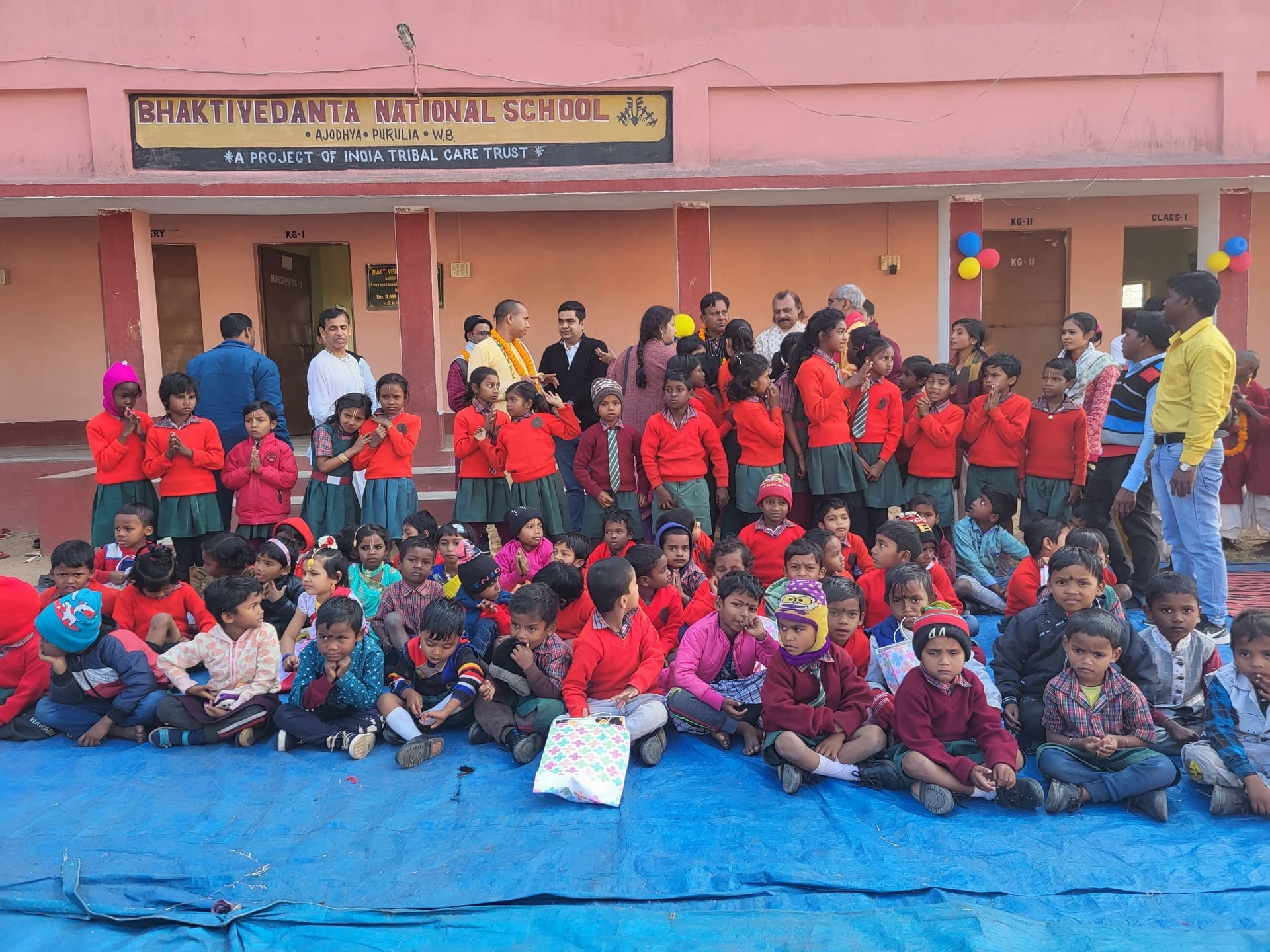
To bridge this divide, the India Tribal Care Trust (ITCT) has introduced computer education into its schools, including the Bhaktivedanta National School in Ajodhya Hills, Purulia. By building dedicated computer labs and designing tailored curricula, the trust is ensuring that geographical isolation does not prevent tribal children from acquiring essential 21st-century skills.
Unlocking a New World of Learning
For a child who has grown up in a mud house surrounded by dense forests, sitting in front of a computer for the first time is an experience of pure wonder. The glow of the screen, the click of the mouse, and the ability to interact with digital interfaces open up a completely new dimension of cognitive development.
The computer literacy program starts with the absolute basics. Instructors teach students how to turn on the machine, use the keyboard, and navigate operating systems. The children practice fine motor skills and spatial awareness using simple drawing applications like Paint, where they enthusiastically sketch their villages, houses, and the surrounding wildlife.

As they progress, the students learn essential office productivity tools, including word processing, spreadsheet management, and slide presentation software. These skills, which urban students take for granted, are vital tools that prepare tribal youth for higher education and professional employment.
The Power of Visual and Interactive Education
Computers are not just subjects to be learned; they are powerful tools that enhance the entire educational experience. In ITCT labs, students use offline educational software and interactive multimedia programs to learn science, mathematics, and geography.
Concepts that are difficult to explain using a traditional blackboard—such as the solar system, the water cycle, or human anatomy—come alive through animations and 3D diagrams. This visual approach is particularly effective for tribal children, many of whom are first-generation learners and may face language barriers with traditional text-heavy curricula. Learning becomes active, self-paced, and deeply engaging.

Moreover, the computer labs foster collaboration and peer-to-peer learning. Since resources are shared, students work in small groups, helping each other solve tasks, debug simple errors, and complete digital assignments. This builds teamwork, communication skills, and critical thinking.
Overcoming Infrastructure Challenges in the Hills
Running a modern computer lab in a remote, mountainous forest area is an exercise in extreme logistics. The primary challenge is the electricity supply, which is notoriously unreliable in rural tribal belts. Power outages can last for days, especially during the monsoon season when falling trees regularly sever overhead lines.
To counter this, ITCT has invested in solar energy systems. Solar panels installed on school roofs charge battery banks, ensuring that the computer labs remain operational even during extended grid failures. This clean, sustainable energy source guarantees that the children's learning schedule is never disrupted by infrastructural failures.
Another challenge is internet connectivity. High-speed broadband is virtually nonexistent in these deep forest zones. The trust handles this by utilizing offline educational repositories, pre-loading software, and setting up local server-based intranets. This allows students to access digital libraries, encyclopedias, and educational games without needing a live, high-bandwidth connection.
Preparing Youth for the Future Job Market
For older students and tribal youth, the computer classes transition into professional vocational training. Basic IT skills, database management, digital design, and programming logic are introduced to help them prepare for entry-level jobs in the service sector, local administration, or digital service kiosks.
With these skills, tribal youth do not have to migrate to cities to work as unskilled manual laborers. They can find dignified employment in nearby towns or set up their own digital services centers in their villages, assisting community members with online banking, government scheme registrations, and utility payments.
The transformation is evident in the eyes of the students. When you ask a child in the computer lab what they want to be when they grow up, the answers are no longer confined to traditional village occupations. They talk of engineering, software development, teaching, and starting businesses. The computer has expanded their horizon of possibility.
How You Can Support Digital Education
Building and maintaining digital infrastructure in remote tribal areas is an ongoing financial commitment. Computers need to be upgraded, software licenses maintained, solar systems serviced, and trained IT instructors compensated.
By contributing to ITCT's digital education fund, you can help purchase desktop computers, fund solar power systems, or sponsor IT training batches for tribal youth. Your support is a direct investment in closing the digital divide and giving a tribal child a fair shot at a modern, digital future. Let us come together to ensure that no child is left behind in the dark side of the digital revolution.