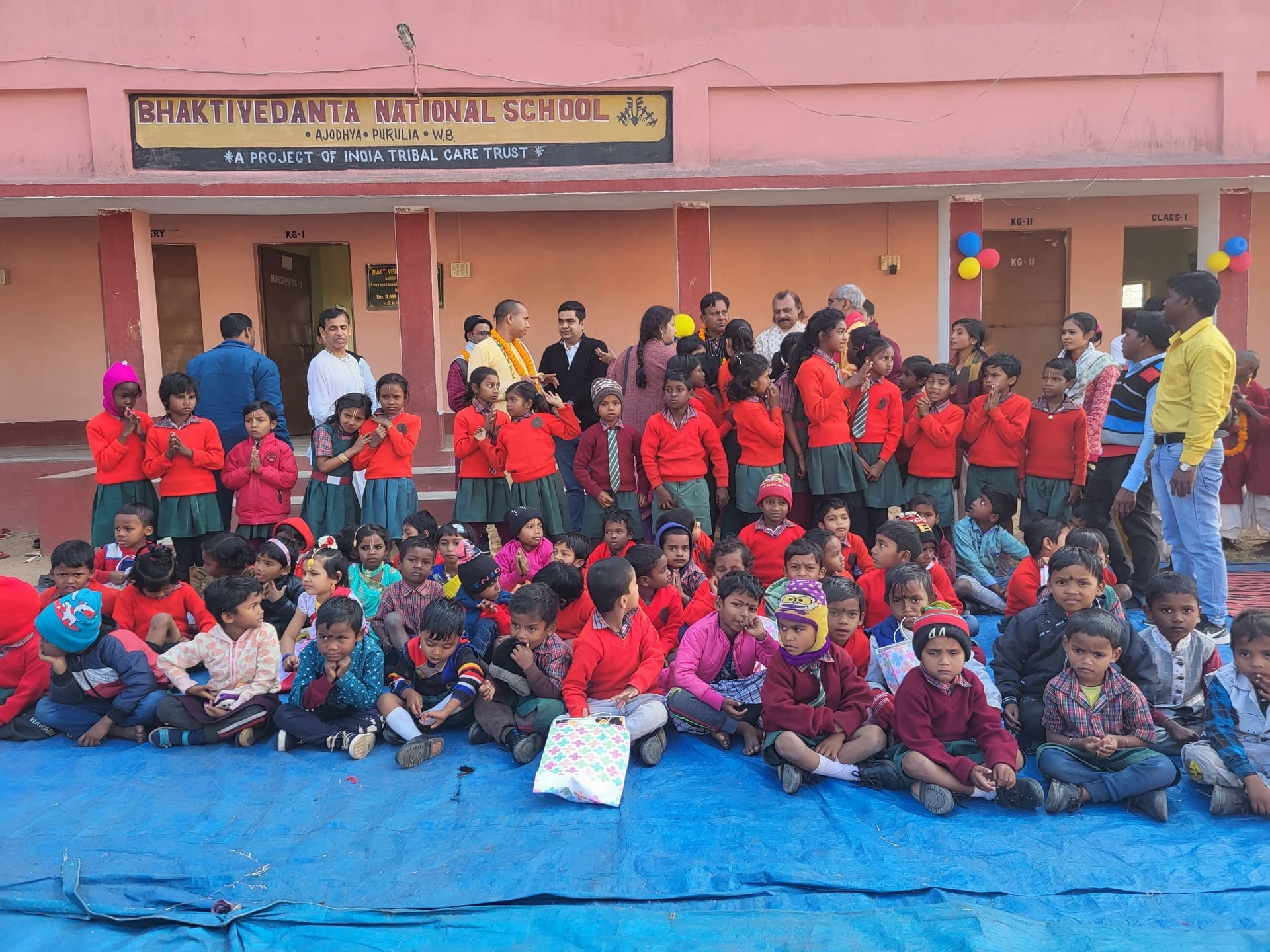
The Daily Journey: Challenges and Hopes of Walking to School in Tribal Belts

For most urban children, going to school involves stepping into a school bus, riding in a car, or walking a few hundred meters on paved sidewalks. But for children living in the remote tribal hamlets of India, accessing education is a daily expedition. Every morning, long before the sun climbs over the hills, these young learners set out on foot, embarking on long, grueling journeys through difficult terrain just to reach a classroom.
Their path is not a simple walk; it is a test of resilience. Yet, day after day, with worn-out shoes or bare feet, and carrying makeshift school bags, they walk. Their determination is a powerful testament to the value they place on education and the hope it represents for their future.
Navigating Forests, Hills, and Monsoon Rivers
To understand the scale of the challenge, one must look at the geography of India's tribal heartlands. Hamlets are often scattered deep inside reserve forests, on the steep slopes of hills, or in remote valleys cut off from main roads.
A typical student's journey involves walking anywhere between three to eight kilometers one way. The paths are unpaved dirt tracks, full of sharp stones, thorns, and steep climbs. In the summer, the heat is intense; in the winter, the morning air is freezing.

The monsoon season brings the greatest dangers. Dirt paths turn into slippery mud slides, making walking hazardous. Streams and small rivers, which are easily crossed in the dry season, swell into fast-flowing, chest-deep torrents. Without bridges, children have to wade through these dangerous waters, holding their books and uniforms high above their heads. If the current is too strong, they are forced to return home, missing days of school.
These physical barriers are a primary reason why drop-out rates in tribal areas are historically high, especially among young girls. The sheer exhaustion of the daily commute, combined with safety concerns along isolated forest paths, often forces parents to withdraw their children from formal schools.
Bringing Education Closer: The Pathshala Model
Recognizing that we cannot immediately build highways or bridges in every remote forest, the India Tribal Care Trust (ITCT) has adopted a simple, brilliant strategy: if the child cannot reach the school, we must bring the school to the child.
This is the philosophy behind ITCT's "Pathshalas"—community learning centers set up right inside the remote hamlets where the children live. Instead of walking miles through dangerous forests, a child only needs to walk a few yards from their home to reach their classroom.

The pathshalas focus on foundational education—literacy, basic mathematics, hygiene, and cultural values. They are designed to fit the daily schedule of the village. The teachers are recruited from local or nearby communities, ensuring that they speak the children's native dialect and understand their customs.
By eliminating the long, hazardous journey, pathshalas have successfully brought thousands of first-generation learners into the educational loop. Once the children build a strong educational foundation at the pathshala, they are better prepared, physically and mentally, to transition to larger central schools for higher classes.
The Hope That Drives the Walk
Despite the hardships, the spirit of these walking students is unbreakable. Along the road, they walk in groups, laughing, playing games, and quizzing each other on lessons. Their makeshift bags—often made of repurposed cement or fertilizer sacks—are carried with pride.
To these children, the school is not just a place of study; it is a gateway to a larger world. It is where they get to eat a hot meal, play with friends on a clean playground, use computers, and interact with teachers who encourage their dreams. The school represents opportunity, a path out of the cycles of seasonal poverty and manual labor that their parents had to endure.
For young children living in deep forest hamlets, walking long distances through challenging terrain is a testament to their dedication to learning and their vision for a brighter future.
How We Can Make the Journey Easier
The resilience of tribal children deserves our support. While ITCT continues to expand its pathshala network and run school buses where roads exist, there is still an enormous need to support these walking students.
Donors can support this cause by providing sturdy school bags, waterproof raincoats and umbrellas for the monsoon, comfortable footwear, and bicycles for older students who have to travel longer distances. Your contribution can directly reduce the physical burden of their daily commute and ensure that their path to education is safe and dry.
Let us stand in solidarity with the children who walk for their future. By making their journey just a little bit easier, we can help them walk all the way to their dreams.