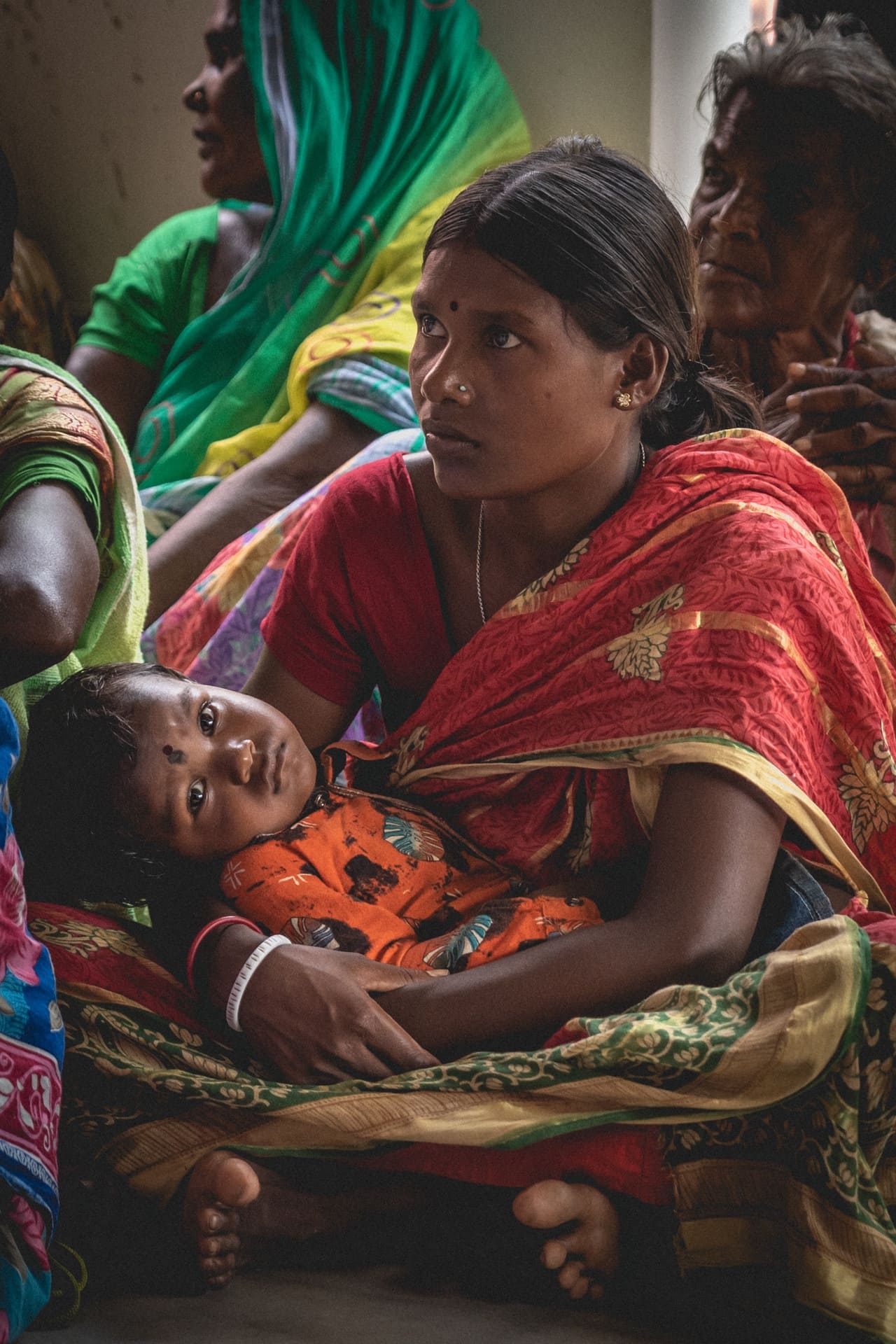
The floor of the grand assembly hall at Sridham Mayapur held more stories than any book could contain. Over 2,500 tribal and marginalised community representatives from at least ten Indian states sat together for three days — sharing food, singing, debating, and quietly reminding the rest of the country that they exist, they matter, and they are not going away.
The 10th All India Tribal Convention, organised by the International Society for Krishna Consciousness (ISKCON) at its global headquarters in Mayapur, Nadia district of West Bengal, concluded on 22 March 2026. It was the largest edition yet — a convergence of voices from West Bengal, Gujarat, Maharashtra, Jharkhand, Assam, Andhra Pradesh, Odisha, Tripura, Telangana, and Mizoram — each carrying the weight of centuries-old cultures that the modern world has been remarkably efficient at ignoring.
A Gathering Unlike Any Other
Walk into any mainstream conference in an Indian city and you will find name badges, projector screens, and catered lunch boxes. Walk into the Tribal Convention at Mayapur and you will find something far more powerful: authenticity. Representatives from communities as diverse as the Santhal, Oraon, Munda, Bhumij, Kora, Lodha, Bhutia, Lepcha, Toto, Asur, Rajbanshi, Namasudra, Bagdi, Bauri, Chamar, Muchi, and Lohar came together — not to perform their cultures for an audience, but to live them alongside each other.
Participants showcased their simple lifestyles and indigenous practices on stage through cultural programmes, seminars, and interactive sessions. There were traditional dances that have been passed down through generations without ever being written down. There were songs in languages that no Google Translate algorithm has learned to decode. And there were conversations — honest, unscripted conversations — about what it means to be tribal in modern India.
The organisers ensured proper arrangements for accommodation, food, and security for all attendees — a logistical achievement that deserves recognition on its own. Housing 2,500 participants from ten states, each with distinct dietary traditions and cultural sensitivities, is not something you manage with a spreadsheet and a few phone calls. It takes genuine understanding.
"The convention seeks to help tribal and marginalised communities feel connected to the mainstream while preserving their distinct identities." — Rasik Gauranga Das, ISKCON Public Relations Officer
Rooted in the Teachings of Chaitanya Mahaprabhu
What separates this convention from a government-organised tribal welfare event — and there are many such events, most of which tribal communities themselves rarely hear about — is its philosophical foundation. ISKCON's public relations officer, Rasik Gauranga Das, explained that the initiative draws deep inspiration from the teachings of Chaitanya Mahaprabhu, the 15th-century saint who championed the dignity of every human being regardless of birth, caste, or social status.
That is not a slogan printed on a banner. It is a principle that has shaped how ISKCON approaches tribal welfare — not as top-down charity dispensed from a position of superiority, but as collaborative upliftment grounded in mutual respect. The convention's seminars and lectures reflected this. Experts working at the grassroots level in tribal development shared their real-world experiences — what works, what fails, what the communities themselves want — through focused sessions on education, healthcare, social upliftment, and sustainable livelihoods.
This approach resonates deeply with our own work at India Tribal Care Trust. We have always believed that preserving tribal identity is not an obstacle to development — it is the foundation upon which meaningful development must be built. You cannot empower a community by asking it to become something else.
The Scale of What ISKCON Has Built
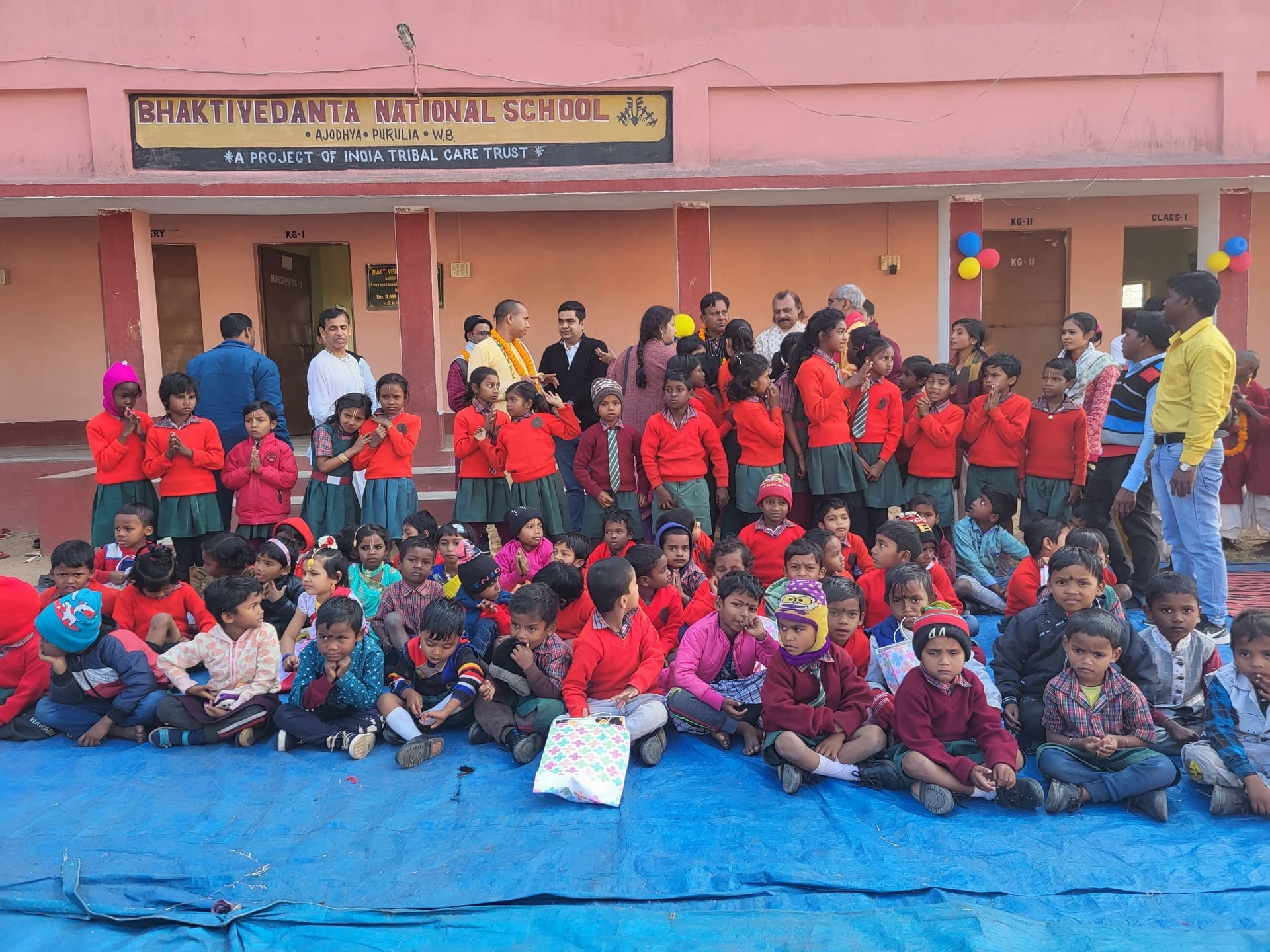
The numbers speak for themselves, but they deserve context. According to the organisation, ISKCON currently operates around 120 learning centres and 18 schools across several states, benefiting nearly 5,000 students under the guidance of about 280 teachers. In West Bengal alone, these initiatives are concentrated in districts such as Purulia, Bankura, and Jhargram — some of the most tribal-dense and developmentally challenged districts in the state.
The 'Nimai Pathshalas' established in these regions provide tribal children with food, lodging, and education — addressing the three barriers that most commonly prevent tribal children from attending school. A hungry child cannot study. A child who lives twenty kilometres from the nearest school cannot attend regularly. A child whose parents need help with farming cannot afford to sit in a classroom all day unless someone ensures the family will not starve. The pathshala model addresses all three simultaneously.
This mirrors what we have built through our own network of pathshalas and schools at India Tribal Care Trust — over 130 learning centres and 18 schools across seven states, serving thousands of students. When organisations working toward the same goal align their efforts, the impact multiplies.
Healthcare That Reaches the Unreached
Education was not the only focus. The convention also highlighted ISKCON's healthcare interventions across tribal areas — regular medical camps, health awareness drives, and safe drinking water initiatives that have collectively served over 22,000 people with free healthcare services in the current year alone.
For anyone who has spent time in India's tribal heartland, that number is not just impressive — it is essential. In many of these areas, the nearest government Primary Health Centre is staffed by one doctor serving tens of thousands of people, if it is staffed at all. Mobile health camps and community health drives are not a nice-to-have supplement; they are often the only healthcare these communities will receive.
At ITCT, we have treated over 30,000 patients through similar mobile health camps and community health programmes. We run ambulance services in areas where the concept of emergency medical transport was previously limited to a bullock cart and a prayer. The parallels between our work and what was discussed at Mayapur are not coincidental — they reflect a shared understanding that tribal healthcare cannot wait for infrastructure to catch up. It must go to the people now.
Cultural Preservation as a Development Strategy
One of the most significant aspects of the convention was its emphasis on cultural richness. This was not a development conference that mentioned tribal culture as an afterthought. Cultural expression was at the centre — traditional knowledge systems, spiritual values, indigenous art forms, and community practices were presented not as curiosities to be studied but as living traditions to be celebrated and strengthened.
This matters because the dominant development narrative in India has, for decades, treated tribal culture as something to be overcome. 'Mainstreaming' tribal communities has too often meant stripping them of their languages, their spiritual practices, their relationship with forests and land, and their community governance structures. What remains is not a developed community — it is a displaced one.
The Mayapur convention offered a counter-narrative. Development and cultural preservation are not opposing forces. A Santhal child can learn mathematics and still know the songs of her ancestors. An Oraon farmer can adopt improved agricultural techniques without abandoning the community's collective farming traditions. A Munda village can have clean drinking water and electricity without losing its sacred groves.
What This Means for the Tribal Welfare Movement
Ten editions of this convention represent a decade of sustained commitment. That kind of consistency is rare in India's development landscape, where initiatives often bloom with great publicity and wither within a year or two when funding dries up or attention shifts to the next trending cause.
The fact that 2,500 people from ten states — many of them from communities whose daily income would not cover an auto-rickshaw ride in a city — made the journey to Mayapur says something important. It says that tribal communities are not passive recipients of welfare. They are active participants in shaping their own future. They want platforms where their voices are heard. They want to connect with other communities facing similar challenges. And they want to do all of this without being asked to leave their identities at the door.
For India Tribal Care Trust, this convention reaffirms what we have known since our founding: the work of tribal upliftment is not a sprint. It is a generational commitment that requires patience, cultural sensitivity, grassroots presence, and above all, respect for the communities we serve. Every school we build, every health camp we run, every pathshala we sustain — they all move the needle a little further. Events like the Mayapur convention remind us that we are not working alone.
How You Can Support This Movement
- Donate to tribal education. Every pathshala, every school meal, every scholarship depends on sustained funding. Support our education programmes and help a tribal child stay in school.
- Fund healthcare in tribal areas. Mobile health camps save lives in areas where hospitals do not exist. Contribute to free healthcare for India's most isolated communities.
- Share this story. The biggest barrier tribal communities face is invisibility. Most Indians have never heard of the Mayapur Tribal Convention, even after ten editions. Share this article and help change that.
- Follow our work. Sustained attention sustains programmes. When you engage with our updates, share our posts, and talk about tribal welfare in your circles, you keep the pressure on and the funding flowing.